A house made of what you had
Branches give you a timber house, stones a stone one, and a pile of both a half-timbered one. Nobody picks a house from a menu — the village simply shows what the three of you carried to the building site.


We build small worlds by hand. No publisher, no roadmap, no hurry — only the games we want to play ourselves.
Indie, as in independent. Say it out loud and you hear indigenous — and where there are indigenous peoples, there are tribes. That is the whole story behind the name.
One game hangs on this tree today. The other branches are not decoration — they are the plan.






In development · Mac & Windows
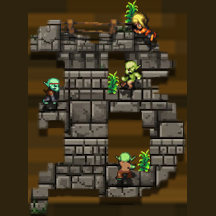
An empty clearing, two others. Every village falls — how far does yours get?
You arrive on an empty clearing with two neighbours and no houses. What the place becomes, the three of you decide by doing it — there is no mayor to ask and no coin to spend.
One donkey for six geese. Everything is traded against something else, and what a thing is worth depends on who happens to need it.
No mayor, no ranks, no orders. Everyone is equal, and the village decides the only way it can: by what people actually do.
Ten base maps, a biome of your choosing, and settlements that grow from a seed — the same way Elite built its galaxy. Other worlds are out there, and you can travel to them.
Every animal, every piece of furniture, every shirt was drawn for this village. German and English throughout, switchable mid-game.
We are not the first to build a village. Here is where Bedrock Society stands next to the two series it gets compared to.
| Bedrock Society | The “Anno” series | The “Animal Crossing” series | |
|---|---|---|---|
| Economy | Barter — goods for goods, no coin | Money, taxes, production chains | Bells, shops, a mortgage |
| Who decides | Nobody — three equals | You, from above | You as island rep; Nook sets the price |
| Your part | One villager among them | An invisible hand above the town | One resident on the island |
| Size | Three people on one clearing | Thousands of citizens | A dozen neighbours |
| Trades | Five: farmer, hunter, smith, builder, druid — anyone can switch | Population tiers, from farmhand to investor | None — the neighbours have hobbies |
| Time | A day is a handful of actions, and the night decides | Real time, pausable | The real clock — one day per day |
| World | Ten base maps, settlements from a seed, other worlds to travel to | Hand-built scenario maps | One island, rolled at the start |
Die Tabelle lässt sich seitwärts schieben →
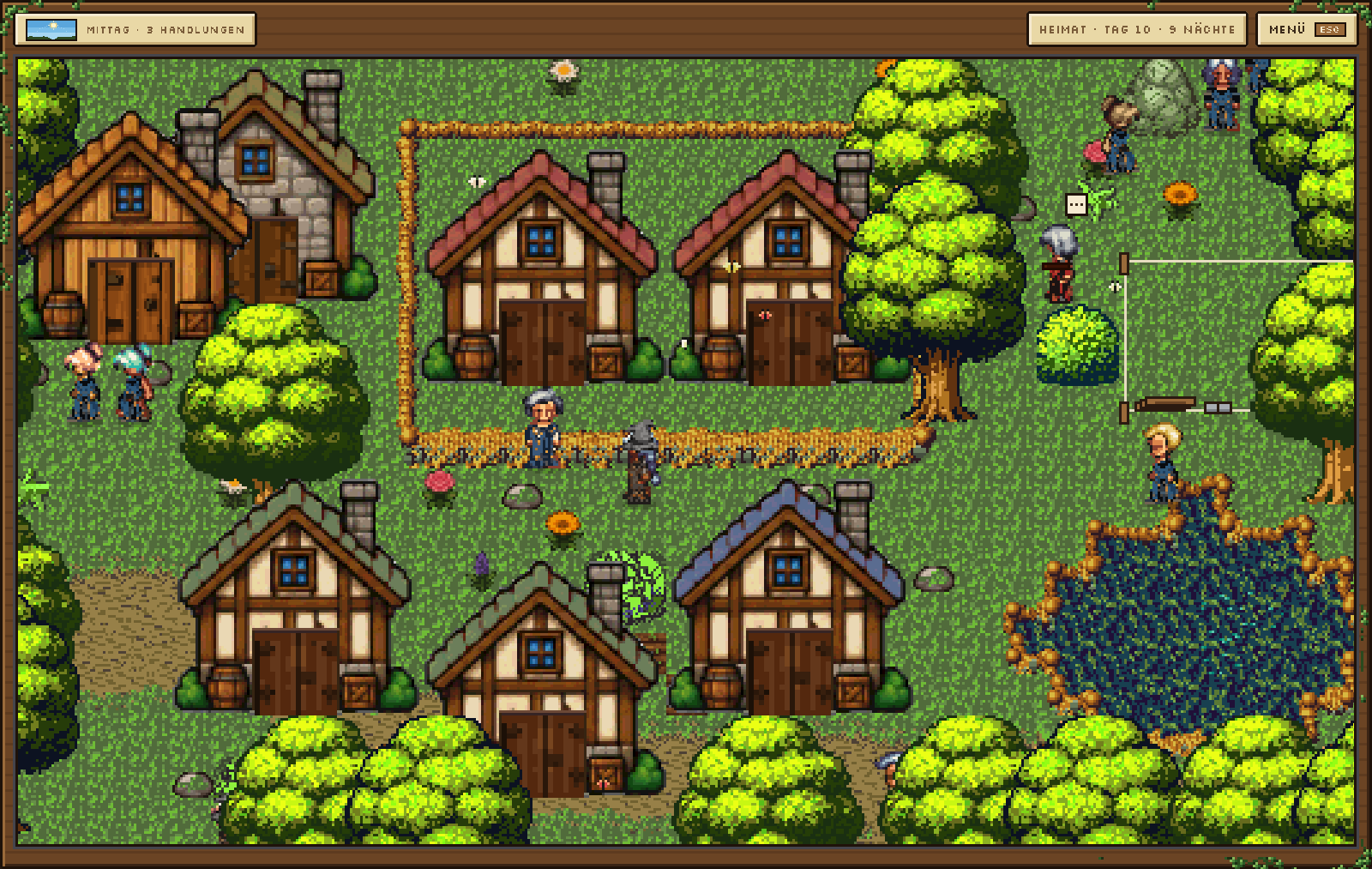
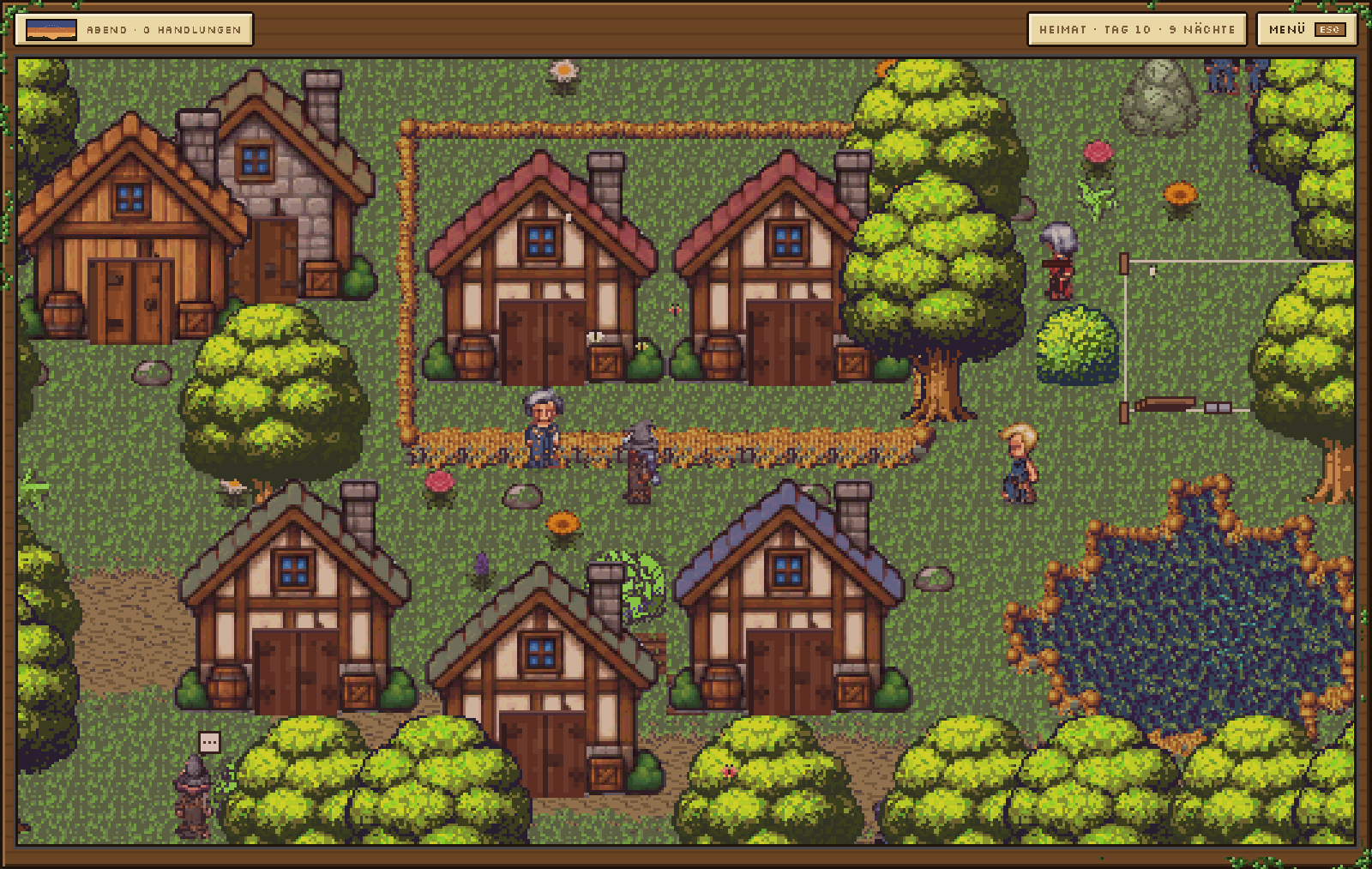
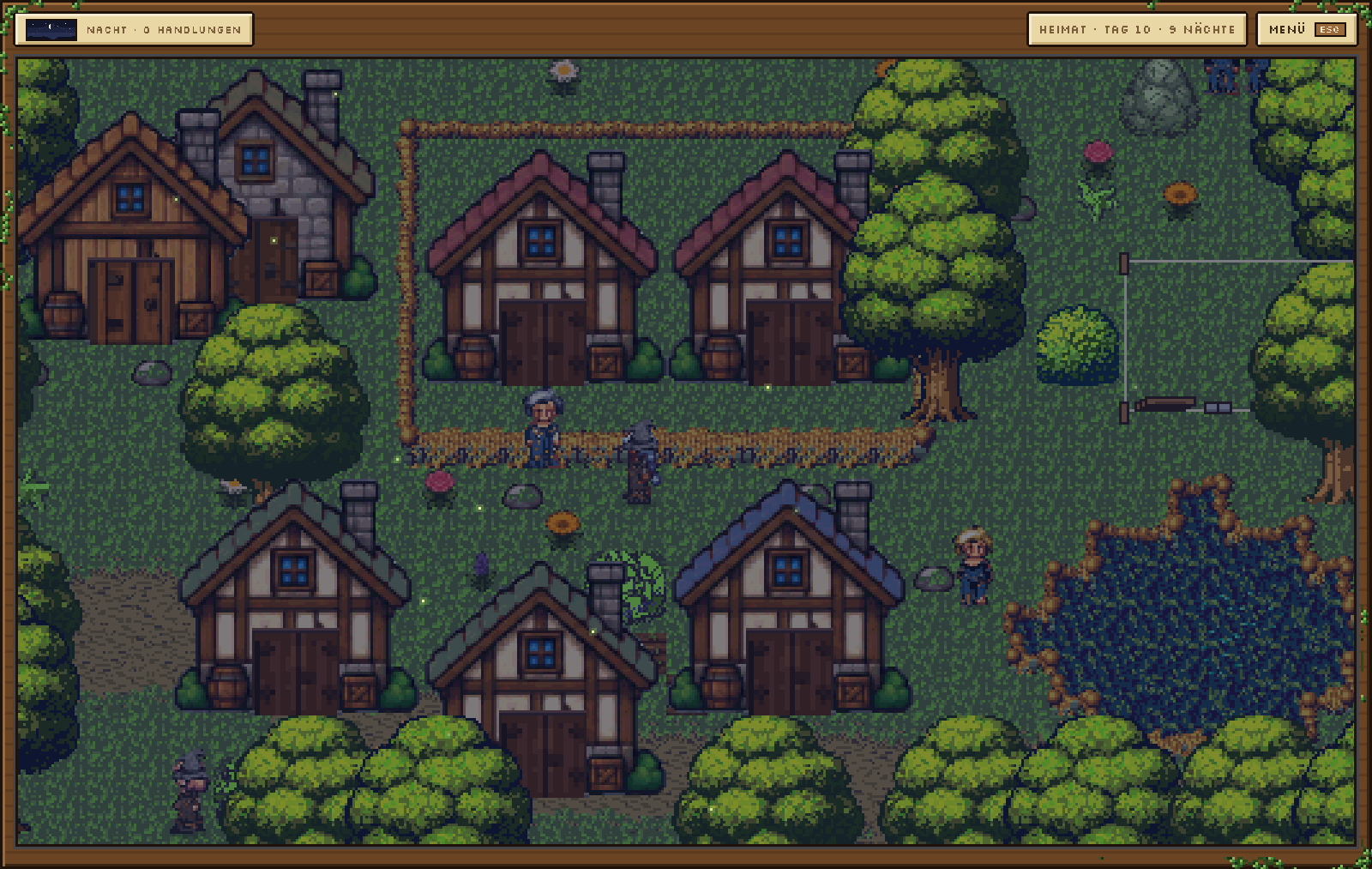
The animals, the furniture, the clothes, the houses, the walls and the fields were all drawn by Splash Arts — the name the three of us work under: Indie.ducx, who decides what the village needs, and two machines that draw alongside him, Anthro and PixelForge. It works like this: one of us draws a goose, the other two say what is wrong with it, and the goose goes back in. Nobody here is a studio, and nobody is paid — the village is simply drawn until it looks like itself.
The game brings its own launcher: pick a version, press play. Older versions stay playable, and they share your villages.
Not signed yet: macOS will call the developer unknown — right-click the app, choose Open, confirm once. On Windows, unzip and start the .exe.
Branches give you a timber house, stones a stone one, and a pile of both a half-timbered one. Nobody picks a house from a menu — the village simply shows what the three of you carried to the building site.
For weeks the wardrobe held nine shades of brown: the recolouring handed out tones by how often they occurred, which flattened every fold in the cloth. Clothes now keep the light and shadow they were drawn with. The stone wall and the rampart were redrawn from scratch, and winter trunks finally have dark bark.
Houses, doors, pond banks, the plateau edge — all redrawn for this game and fitted together along one shared seam. Walls turn corners properly now, with a tall corner post where the line bends instead of a sawn-off end.
A village now travels as a block of text: copy it out of one version, paste it into another, and the save is checked before anything is overwritten. The village book went with it — arrow keys for task and trade, Enter for the next inhabitant, no dialogue in the way.
Goose, chicken, goat, sheep, pig, donkey and the first dog — all drawn by hand, all tamed rather than bought. Animals left the trading posts entirely: you feed a shy one for three days, and you know from day one which animal it will be.
Every piece in the house is now hand-drawn with four views, down to the stool and the jug. The launcher keeps every published version, so you can walk back into an older one without losing a village.